

How to Score in H2 Physics Application Questions
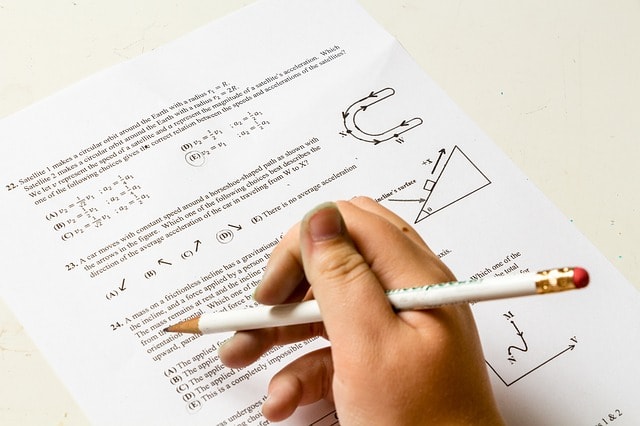
The jump from O-Level to H2 Physics catches many Singapore students off guard. In Secondary school, a good memory, neat working, and steady practice can carry a student a long way. In Junior College, the H2 Physics paper asks for something more demanding: the ability to apply principles to situations that were never practised directly. Application questions are where many A and B grade differences are decided, because they reveal whether a student can reason through unfamiliar information instead of only repeating known examples.
Scoring consistently on these questions is not a mysterious talent. It is a trainable exam skill built from a repeatable method: read the question carefully, identify the physics behind the scenario, set up the reasoning before the calculation, and write the answer in a way the mark scheme can reward. For families searching for Top Physics Tuition Singapore, the real value is support that helps students build this discipline for H2 Physics under time pressure.
What Makes H2 Physics Application Questions Different
An application question rarely announces its topic. It may describe a satellite moving in orbit, a charged particle entering a magnetic field, a block oscillating on a spring, or an experiment shown through a graph. The student must decide which principle governs the situation before any formula becomes useful. This is why students who memorise worked examples often feel stuck when the paper presents the same principle in a new costume.
The difficulty is intentional. H2 Physics is designed to reward understanding, judgement, and transfer. The examiner is not only asking whether a student knows a law. The examiner is asking whether the student can recognise when that law applies, what assumptions are valid, and which quantities matter. This explains why two students with similar content knowledge can perform very differently on the same paper.
Step 1: Identify the Principle Before Touching a Formula
The first habit is to pause and name the physics. Is this a conservation of energy problem, a Newton’s second law problem, a circular motion problem, a field problem, or a wave superposition problem? Writing that idea in plain words, even mentally, prevents the common mistake of reaching for the first formula that looks familiar.
For example, a question describing a trolley moving down a slope and asking for its speed at the bottom may be best handled using energy conservation. A student who notices this can compare gravitational potential energy lost with kinetic energy gained, then include any work done against friction if the surface is rough. A student who immediately reaches for kinematics may get trapped because the acceleration is not directly provided. The physics choice comes before the maths.
Step 2: Translate the Scenario Into a Physics Model
After identifying the principle, the student should simplify the scenario into a model. That might mean drawing a force diagram, sketching a path, marking the direction of acceleration, identifying an energy transfer, or labelling a graph. This step feels slow at first, but it saves time because it stops students from wandering through irrelevant formulas.
A magnetic field question is a good example. If a charged particle enters a uniform magnetic field at right angles, the student should first recognise that the magnetic force provides the centripetal force. Once that model is clear, the equation follows naturally. Without the model, the student may remember several formulas involving charge, velocity, field strength, and radius, but not know how they connect.
Step 3: Set Up the Physics, Then the Calculation
Students often lose marks because they mix physics reasoning and arithmetic too early. The safer method is to write the relationship in symbols, substitute values with units, then calculate. This separates the thinking from the number work and makes the answer easier for an examiner to follow.
This order also protects method marks. Even if the final numerical answer is slightly wrong, a correct setup shows that the student understood the governing principle. In a long H2 paper, salvaging method marks matters. Students who jump straight to numbers give the marker less to reward when an arithmetic slip appears.
Step 4: Treat Data-Based Questions as Application Questions
Data-based questions are a major part of H2 Physics, and they test the same application skill in a different form. Instead of describing a situation in words, the paper may present a graph, a table, or experimental results. The student must read axes, units, gradients, intercepts, and trends before deciding what the data means physically.
A straight-line graph is often a clue. If the y-axis and x-axis match the rearranged form of a physics equation, the gradient may represent a real quantity. For example, a graph could be arranged so that the gradient relates to resistance, spring constant, acceleration, or another physical parameter. Strong students do not simply calculate the gradient. They explain what the gradient represents and why it matters.
Worked Approach: Combining Energy and Friction
Consider a box sliding down a rough incline. The question gives the height, mass, frictional force, and length of the slope, then asks for the speed at the bottom. The physics is not pure energy conservation, because friction removes energy from the system. A strong answer starts with an energy balance: gravitational potential energy lost equals kinetic energy gained plus work done against friction.
The calculation may be straightforward once the balance is written correctly. What decides the marks is recognising that friction must be included from the start. Students who have only memorised a smooth-slope example may write a neat but incomplete solution. Students trained to ask what energy is gained, lost, and transferred can adapt to the rough surface and keep the marks.
How Structured H2 Support Builds Application Confidence
Application skill is difficult to develop alone because students often see only the final answer, not the exact point where their reasoning went wrong. Structured feedback helps by correcting the thinking chain. Did the student identify the right principle? Did they miss a force? Did they interpret the graph correctly? Did they explain the relationship clearly enough for the mark scheme? These questions matter as much as the final number.
At TGC Academy, H2 Physics support focuses on reasoning, question interpretation, and clear answer structure alongside content revision. The aim is to help students approach unfamiliar questions with a method they can repeat, not to make them memorise endless variations of the same problem.
Frequently Asked Questions About H2 Physics Application Questions
Why do strong O-Level students struggle with H2 application questions?
O-Level papers can reward strong recall and routine practice, while H2 Physics places more weight on judgement and transfer. A student who did well by memorising familiar patterns may need time to build the deeper reasoning expected in JC.
How much of H2 Physics tests application?
A significant share of higher-order marks comes from applying principles to unfamiliar situations, interpreting data, and explaining reasoning. Straight recall still matters, but it is rarely enough for the top bands.
What is the best habit to start with?
Before writing a formula, name the governing principle in one sentence. This simple habit forces the student to read the scenario and decide which physics is being tested.
Do data-based questions require a different strategy?
They require the same discipline, but applied to information. Read axes and units, identify trends, consider what the gradient or intercept represents, then connect the data back to a physics principle.
Can application skill improve in JC2?
Yes, especially when practice is targeted. Earlier is better, but even in JC2 students can improve by reviewing why they chose a method, not only whether the final answer was right.
The students who handle H2 Physics well are not always the ones who memorise the most. They are the ones who can look at a new situation, identify the underlying principle, and build a clear answer under exam conditions. With steady practice and guided correction, application questions can become less intimidating and far more manageable.